Ragdoll Archers - CrazyGames
CrazyGames.comArcade
4.5745.00 Reviews
- Version
- 0.6.5
- Installs
- 1.00M
- Age Rating
- Teen
Screenshots
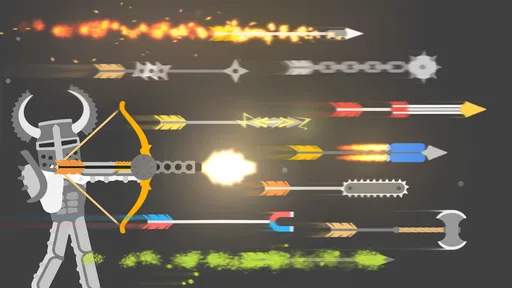
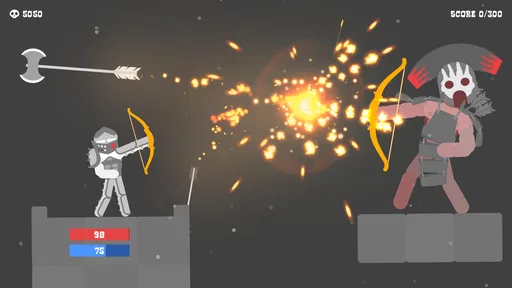
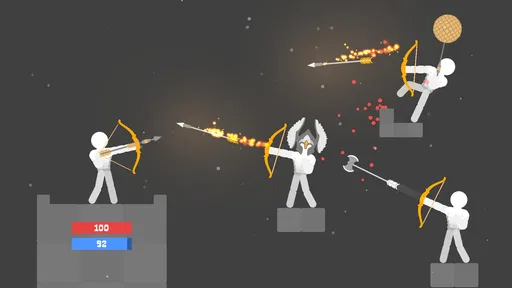
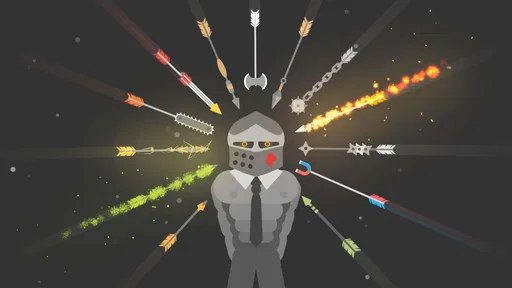
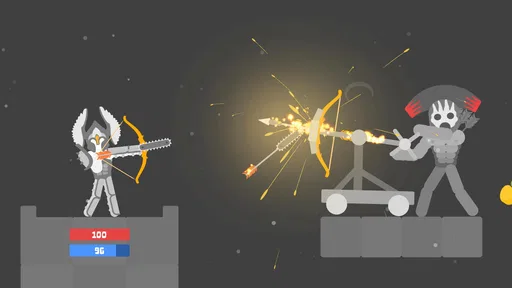
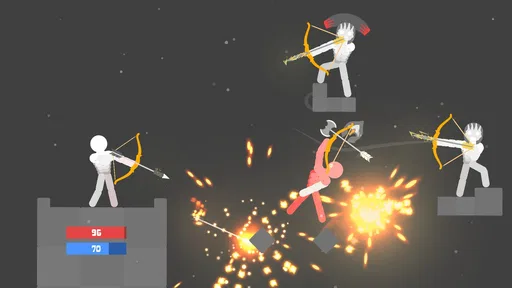
Our Review of Ragdoll Archers - CrazyGames
 Analysis by Appyee
I spent time with Ragdoll Archers as a quick arcade game built around aiming, timing, and the entertaining unpredictability of physics. The basic idea is easy to understand: guide an archer, choose a shot, and try to bring down opponents while bodies and arrows react in a loose, exaggerated way. It comes from CrazyGames.com, is free to play, and fits the kind of game I open when I want a short session rather than a long campaign.
What makes it more interesting than a simple tap-to-shoot title is the need to adjust each attempt. A shot that looks perfect can glance away, hit a different part of the target, or create a useful chain of movement. I found myself paying attention not only to where the arrow landed, but also to what the impact might do next. That gives the game a small strategic layer without turning it into a complicated tactics experience.
The game is listed in the arcade category and carries a Teen content rating. It arrived on September 19, 2023, and the current version is 0.6.2. It supports Android 7.0 and later, so it can suit people using older compatible devices as well as newer phones. Its average rating is 3.6 from around 2.4 thousand ratings, and it has passed 500 thousand installs. Those figures suggest a game with a meaningful audience, although the rating also hints that the experience will not satisfy everyone equally.
How clear the game feels from the first shot
The strongest part of the presentation is how quickly the central action communicates itself. I did not need a long explanation to understand that positioning, aiming, and release timing mattered. The visual language is direct: the characters are shaped like ragdolls, the arrows are easy to identify, and the battlefield keeps attention on the immediate exchange. For an arcade game, that fast readability is important because it lets me start experimenting instead of learning a large menu system.
The interface works best when I treat it as a visual problem rather than a text-heavy one. I can look at the character positions, estimate the direction of a shot, and react to the result. This is helpful for players who prefer learning through movement and feedback. It also makes the game approachable during a short break, when I may not want to read instructions or remember a complicated set of commands.
That simplicity has a limit. A clear first action does not automatically mean that every later situation is equally easy to read. Physics-based movement can create moments where several things happen at once, and a ragdoll body may move in a way that feels funny but not entirely predictable. I sometimes understood why a shot failed only after watching the impact again in my mind. Players who want precise, highly consistent feedback may find this less comfortable than a more traditional lane-based arcade game.
I also think the game benefits from being played with the screen held in a steady position. When I am sitting down and can focus on the whole play area, judging the angle feels much easier than when I am walking, standing on public transport, or trying to play one-handed while distracted. The controls may be simple, but aiming still depends on visual attention. That distinction matters: a game can be easy to learn and still demand concentration during active play.
Learning the physics instead of chasing perfect precision
The useful mindset is to see each failed shot as information. Rather than repeating the same gesture immediately, I try changing one element at a time: the angle, the force, or the point where I want the arrow to connect. This turns the loose physics from a source of frustration into part of the challenge. The game is more satisfying when I accept that a near miss can reveal something about the next attempt.
One practical tip is to aim for a reliable first impact instead of always attempting the most dramatic shot. A direct hit can give me a better sense of how the target reacts, while an ambitious angle may create too many variables. Once I understand the current arrangement, I can experiment with shots that use the environment of the encounter more creatively. That approach is especially useful for players who become discouraged by unpredictable results.
The trade-off is clear: the same physics that make a successful hit memorable can make a failed attempt feel arbitrary. If you prefer arcade games where practice steadily produces exact repetition, this may not be the right choice. If you enjoy adjusting to imperfect outcomes and watching a plan turn into an unexpected result, the design has more appeal.
Motor demands, visual comfort, and different ways of playing
From a motor perspective, the game asks for relatively focused input rather than a large collection of simultaneous commands. That can be a positive for players who find complex control layouts tiring. I can concentrate on the shot itself instead of managing a long list of buttons. The reduced command burden also makes it easier to return after a break because I do not have to rebuild muscle memory for many separate actions.
However, aiming still relies on controlled touch movement and timing. Someone with limited fine-motor control may find small corrections difficult, especially when an almost-right angle produces a very different result from the intended one. The physics can amplify a minor input mistake, so the game may feel less forgiving than its simple controls suggest. I would not describe it as universally accessible just because the action is easy to explain.
Players with hand fatigue may prefer short sessions. The game naturally supports that pattern because an individual attempt does not require a long commitment, but the need to aim repeatedly can still become tiring over time. I found it more comfortable to pause between rounds rather than playing continuously while trying to force better results. That is a small habit, but it helps keep the experience playful instead of turning every miss into a test of endurance.
Visual attention is equally important. The arrows, characters, and moving bodies need to remain distinguishable while the action unfolds. The ragdoll style adds personality, yet it can also make the screen feel busier when several movements overlap. Players who are sensitive to rapid motion or who have difficulty tracking small objects may want to test the game briefly before committing to longer sessions.
Sound is not the only way to understand what is happening, because the main feedback comes from visible movement and impact. That makes the core idea reasonably approachable for someone who does not want to rely on audio cues. Still, I would avoid claiming that this automatically makes every part of play equally accessible. Visual feedback can be useful while also becoming hard to follow during chaotic moments.
Why the ragdoll style helps and hinders
The character design lowers the emotional weight of failure. When an opponent tumbles in an exaggerated way, a missed shot often feels amusing rather than harsh. That tone is valuable for casual players and for anyone who prefers playful competition over intense realism. It also encourages experimentation because the result of a strange angle can be entertaining even when it is not optimal.
At the same time, exaggerated movement makes precise prediction harder. The game asks me to balance two goals: read the shot accurately enough to improve, while accepting that the final motion may still surprise me. This is a meaningful accessibility trade-off. Players who enjoy visual comedy may see the unpredictability as the main attraction; players who need stable cause-and-effect feedback may experience it as a barrier.
Playing in real situations rather than ideal ones
A realistic everyday use case is a short wait at a café or a few minutes before an appointment. I can open the game, make several attempts, and stop without needing to remember a detailed story or reach a save point. That makes it a good companion for fragmented time. The free price also lowers the risk of trying it casually, particularly for someone who wants a small arcade distraction rather than a major purchase.
It is less suitable when my attention is divided. I would not choose it while walking, during a conversation, or in a crowded place where the phone is moving constantly. The controls may be compact, but the decision-making is not entirely passive. I need to see the angle and follow the result, so the game rewards a stable posture and a few uninterrupted minutes.
For players using older hardware, the minimum operating-system requirement of Android 7.0 is helpful because it does not restrict the game to only recent software. Even so, operating-system compatibility is not the same as a guarantee of an equally comfortable experience on every device. Screen size, touch responsiveness, and general performance can affect how easy it is to judge a shot. A larger, steady screen may be more comfortable for careful aiming than a small phone used in motion.
The Teen rating is another reason to consider the intended audience before installing. The ragdoll presentation is stylized, but parents should still treat the age guidance as relevant when deciding whether it suits a younger player. I would also recommend that families focus on how the child responds to the repeated shooting theme and chaotic impacts, rather than assuming the cartoon-like visuals settle the question on their own.
Who will appreciate it, and who should look elsewhere
I would recommend it to players who enjoy quick arcade rounds, light physics experimentation, and the satisfaction of improving through observation. It is especially appealing if you like games where an imperfect plan can still produce an entertaining result. People who want a small challenge for spare moments may get more value from it than players looking for a deep progression system or a long-form adventure.
I would be more cautious about recommending it to someone who dislikes randomness in aiming. The game’s charm depends on movement that is not always perfectly predictable, so a player seeking exact competitive control may become annoyed. It may also be a poor fit for anyone who needs large, highly customizable controls or who finds moving visual scenes uncomfortable. In those cases, a slower puzzle game or a more deliberately structured arcade title would probably be a better choice.
Compared with a conventional target-shooting arcade game, this one places more emphasis on what happens after contact. In a typical precision title, success often means hitting the correct target cleanly and repeating the action. Here, the impact itself can become part of the problem. Compared with a turn-based strategy game, though, it remains much lighter: there is no need to study a broad map or plan a long sequence of actions. Its identity sits between quick reflex play and small-scale tactical adjustment.
That middle position explains both its appeal and its limitations. I can enjoy a few attempts without making a serious commitment, but I should not expect the depth of a full strategy game. Likewise, I can use planning to improve my shots, but I cannot remove the playful unpredictability that gives the game its personality. Choosing it depends on whether that balance sounds inviting or irritating.
Small techniques that make attempts more useful
My first practical rule is to avoid changing everything after a miss. If I alter the angle, strength, and target point at once, I learn almost nothing from the outcome. Adjusting one variable makes the physics easier to understand and gradually builds a personal sense of how the arrows behave. This is a simple method, but it turns casual play into more deliberate practice without making the game feel like homework.
A second useful habit is to watch the opponent’s position before preparing the shot, rather than reacting only after the round begins. I look for the most stable route to an initial hit and save elaborate attempts for situations where a direct shot is clearly unreliable. This reduces wasted gestures and helps players with limited energy or concentration get more value from each attempt.
Third, I treat unusual outcomes as opportunities rather than automatically restarting mentally. A body that falls into an unexpected position can change the next opening, and an arrow that does not land exactly where planned may still reveal a safer angle. This is where the game differs from a strict precision challenge: adaptation is often more valuable than insisting on the original plan.
For a more comfortable setup, I would play with the phone supported rather than held loosely, take regular breaks, and avoid bright, visually busy surroundings when possible. These are not special game features, but they make a real difference because the core challenge depends on seeing small positional changes. The game does not need a complicated accessibility routine; it needs a playing context that gives the player enough stability to read the action.
Another trade-off concerns session length. Short play keeps the physics amusing and prevents repeated misses from becoming frustrating. Longer sessions can be worthwhile when I am learning a particular pattern, but they also expose the limits of the simple loop. If the basic shooting interaction does not remain enjoyable after several rounds, extra time is unlikely to transform it into a deeper experience.
What the current package says about long-term appeal
The current version is 0.6.2, which places the game in a relatively early-looking stage of its version history. I would approach it as a focused arcade experience rather than a finished substitute for a much larger game. The important question is not whether it offers every feature a player might imagine, but whether the central shot-and-reaction loop is enjoyable enough to support repeated short visits.
The audience numbers show that many people have at least tried it, while the 3.6 average rating suggests a mixed response rather than universal enthusiasm. I read that combination as a useful warning to set expectations properly. The game can be fun when its physics create surprising victories, but the same system can feel inconsistent if I am looking for dependable precision. Its reception makes more sense once that central trade-off is clear.
Because it is free, trying it is straightforward for a curious arcade fan. The more important cost is attention: will I enjoy adjusting shots when the outcome is not perfectly controlled? If yes, the game can fill small gaps in the day. If no, the lack of exact predictability may make even a free download feel like wasted time.
I also would not choose it as a replacement for a game designed around accessibility customization. Its simple command structure is a helpful starting point, but simplicity does not cover every need. Players who require adjustable visual effects, alternative input methods, or very forgiving timing should investigate whether the basic interaction feels manageable on their own device and in their own playing environment.
My inclusive verdict on this physics arcade game
After playing it, I see Ragdoll Archers as a compact, free arcade game with a clear premise and a distinctive sense of physical comedy. It is easy to begin, works well for short sessions, and rewards players who enjoy learning from imperfect shots. CrazyGames.com has built the experience around a loop that is more thoughtful than a simple tap target, because every impact can change what I expect next.
Its inclusive qualities come mainly from the low number of commands, the visual nature of the central action, and the ability to play in brief bursts. Those strengths can help people who prefer uncomplicated controls or who have limited time. They do not erase the demands of aiming, tracking movement, and tolerating unpredictable results. The game is welcoming in concept, but not universally comfortable in execution.
My advice is to try it when you want a playful physics challenge and can give the screen your full attention. Use small adjustments to learn the shot behavior, support the phone if fine control is tiring, and stop when the visual motion or repeated aiming becomes uncomfortable. For players who enjoy controlled precision, slower pacing, or extensive customization, another arcade or puzzle option will likely be a better match.
For everyone else, the appeal is refreshingly specific: line up a shot, watch the plan collide with physics, and decide whether the result teaches you something or simply makes you laugh. That combination is enough to make the game worth testing, provided you accept that its biggest strength is also its main barrier: the fun depends on outcomes you cannot always control.
Privacy and Permissions
See what permissions an app requests and how it handles your data.
- Wi-Fi connection information
- view Wi-Fi connections
- Other
- view network connections, full network access, reorder running apps, control vibration, prevent device from sleeping, Google Play license check
Verdict
Strengths of Ragdoll Archers - CrazyGames
- Simple controls make it easy to start playing immediately.
- Physics-based shots create unpredictable and entertaining moments.
- Short rounds suit quick gaming sessions on mobile devices.
- Character and weapon upgrades add a sense of progression.
- Cartoon-style visuals are colorful and easy to understand.
Limitations of Ragdoll Archers - CrazyGames
- Gameplay can become repetitive after extended sessions.
- Some upgrades may require considerable time or repeated play.
- Physics occasionally feel inconsistent during difficult shots.
- The small-screen interface can feel crowded during battles.
- Ads may interrupt the experience for free players.
Other Releases by CrazyGames.com
View All
Space Waves - CrazyGames
Arcade4.6
Similar Picks in This Category
View All
Subway Surfers
SYBO Games4.6

Stickman Party 234 MiniGames
PlayMax Game Studio4.6

Subway Princess Runner
Ivy4.4

Temple Run
Imangi Studios4.2

Zombie Tsunami
Mobigame SAS4.6

Stack Ball - Crash Platforms
CASUAL AZUR GAMES4.5
Frequently Asked Questions
What is Ragdoll Archers - CrazyGames?
Ragdoll Archers - CrazyGames is a physics-based archery game built around simple controls, chaotic ragdoll reactions, and progressively tougher enemies. You aim and release arrows to defeat opponents while taking advantage of headshots, body damage, weapon upgrades, and environmental positioning. The appeal comes from its easy-to-understand gameplay and unpredictable character movements, making short sessions entertaining even though the overall objective remains straightforward.
How do you play Ragdoll Archers - CrazyGames?
Gameplay is mainly based on aiming, adjusting the shooting angle, and controlling the strength of each arrow. Players must consider distance, enemy movement, armor, and vulnerable areas before firing. Successful hits earn rewards that can be used to improve equipment and combat performance. The controls are generally accessible for beginners, but later encounters require better timing and more careful shot placement rather than simply firing as quickly as possible.
Is Ragdoll Archers - CrazyGames free to download and play?
The game is generally available to play without an upfront purchase, although the exact availability and monetization can depend on the platform or version you access. Free games of this type may include advertising, optional purchases, or limitations connected to progression and rewards. Before downloading, it is worth checking the official store listing for the current price, in-app purchase details, supported devices, and any age or account requirements.
Does Ragdoll Archers - CrazyGames require an internet connection?
Whether a constant internet connection is needed can vary between the mobile version and the browser-based CrazyGames edition. Some gameplay may work offline after installation, but advertisements, cloud features, updates, leaderboards, or reward systems can require connectivity. If you plan to play while traveling, test the app with Wi-Fi and mobile data disabled first, because offline functionality and available features may change after updates.
Is Ragdoll Archers - CrazyGames suitable for children?
The game uses cartoon-style ragdoll characters and exaggerated physics rather than realistic violence, but its main purpose is still shooting enemies with arrows. Parents should review the age rating, advertising behavior, and in-app purchase settings before allowing younger children to play. The controls are easy to learn, while the repeated combat and potentially competitive progression may be better suited to players who understand responsible screen time and spending.
Play our best games!


